
The Hoover Dam is one of America’s most iconic engineering landmarks, standing proudly on the border between Arizona and Nevada. Built between 1931 and 1936, this massive project was a groundbreaking achievement of its time, made possible through cooperation between the two states and multiple federal agencies. Today, the dam remains a powerful symbol of ingenuity, perseverance, and large-scale collaboration, drawing visitors from around the world who come to admire both its history and its sheer scale.
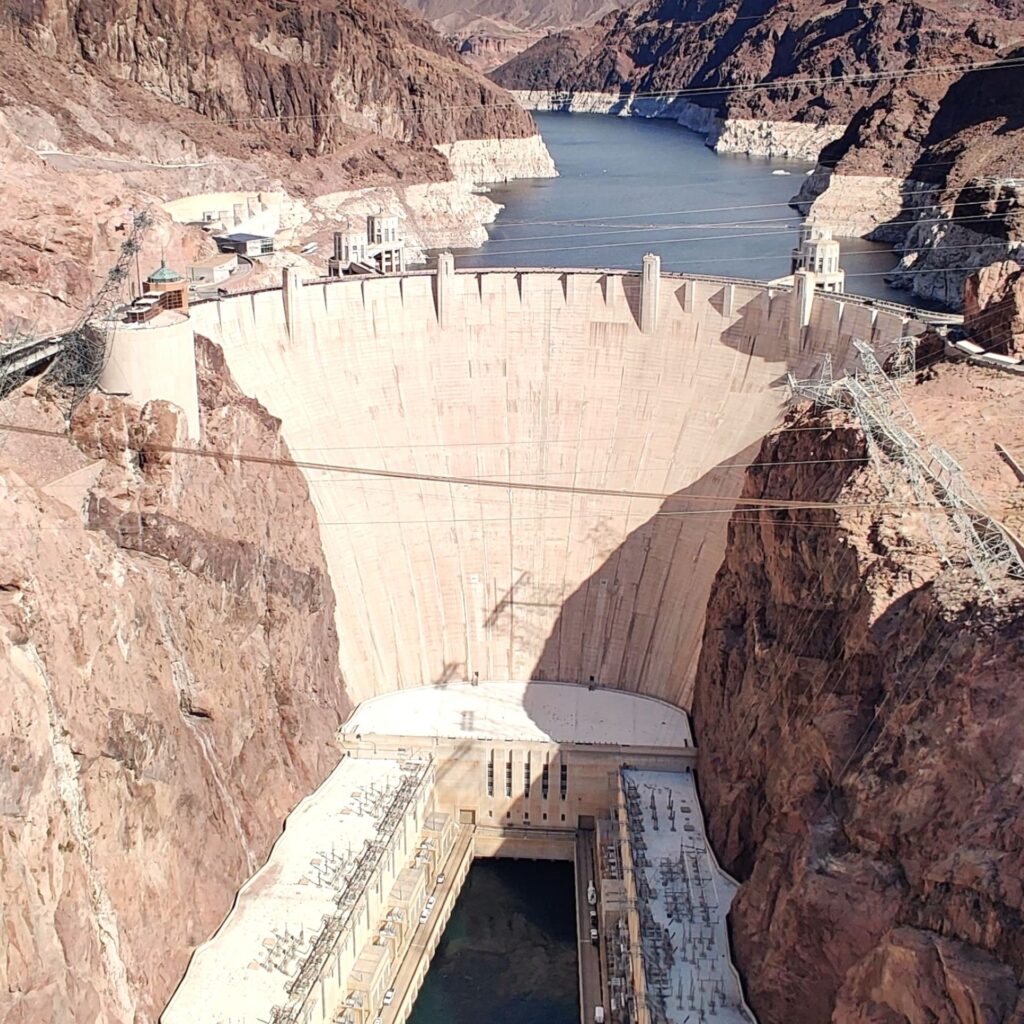
Key Features:
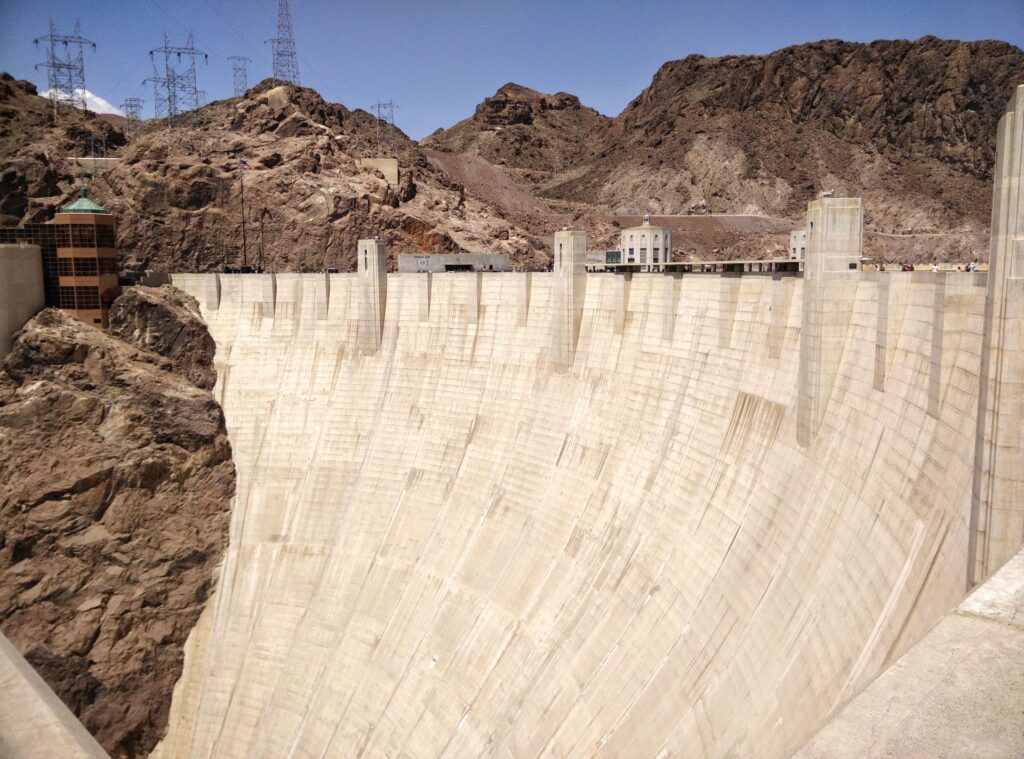
- Height and Width: Standing at 726 feet tall and spanning nearly a mile wide, the dam’s height of 726 feet (221 meters) makes it one of the world’s largest concrete structures by volume, while its girth is approximately 1.3 miles (2 kilometers).
- Reservoir: The reservoir behind the Hoover Dam holds about 90 cubic miles (378 billion liters) of water, providing year-round power and a reliable supply for millions across several states.
- Power Generation: The dam is capable of generating approximately 2,080 megawatts – enough electricity to serve over two million homes annually. This makes it one of the largest hydroelectric stations in the U.S., with an installed capacity equivalent to five nuclear power plants.
- Tours: Visitor centers and museums offer insight into dam construction, its hydroelectric power generation, and environmental impacts via guided tours, exhibits, and educational programs.
Hoover Dam
When visiting the Hoover Dam, there are two distinct areas to explore. The first is the dam itself, where you can park and walk toward the structure, giving you the perfect opportunity to capture some great photos like the ones below. The second is the Memorial Bridge that allows you to get a great view of the Dam, which I talk about below.
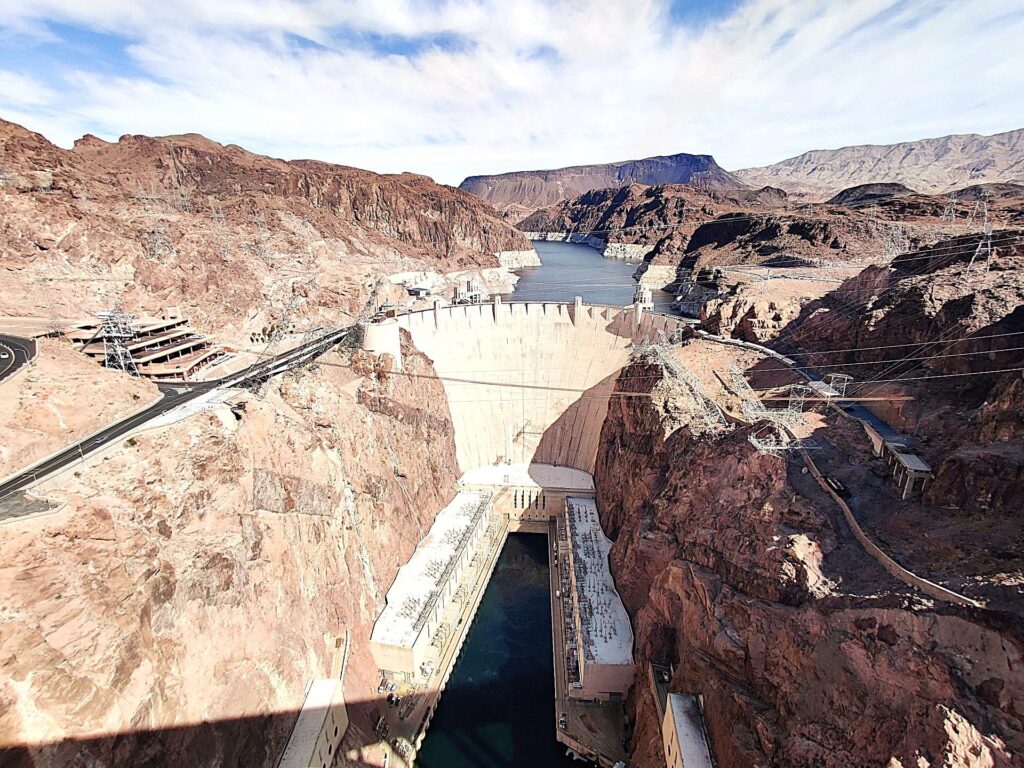
This photo really puts the sheer height of Hoover Dam into perspective.
Mike O’Callaghan–Pat Tillman Memorial Bridge
If you are wondering about the bridge towering above the dam, it is the Mike O’Callaghan–Pat Tillman Memorial Bridge. From the Nevada side, a short walk along the pedestrian path leads to sweeping, bird’s-eye views of Hoover Dam and the Colorado River below. It is one of the best spots in the area for photos and offers a completely different perspective on this iconic feat of engineering.
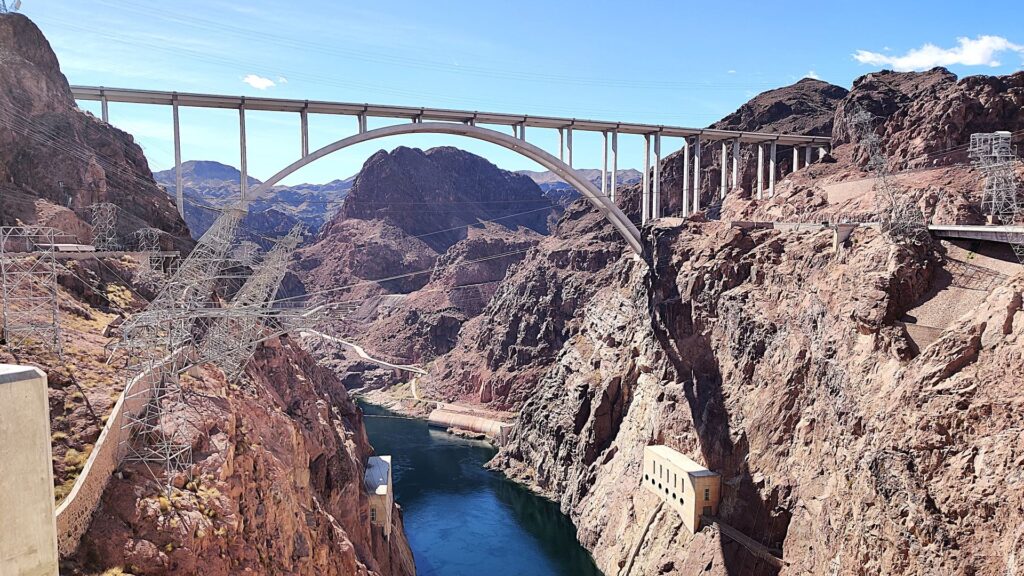

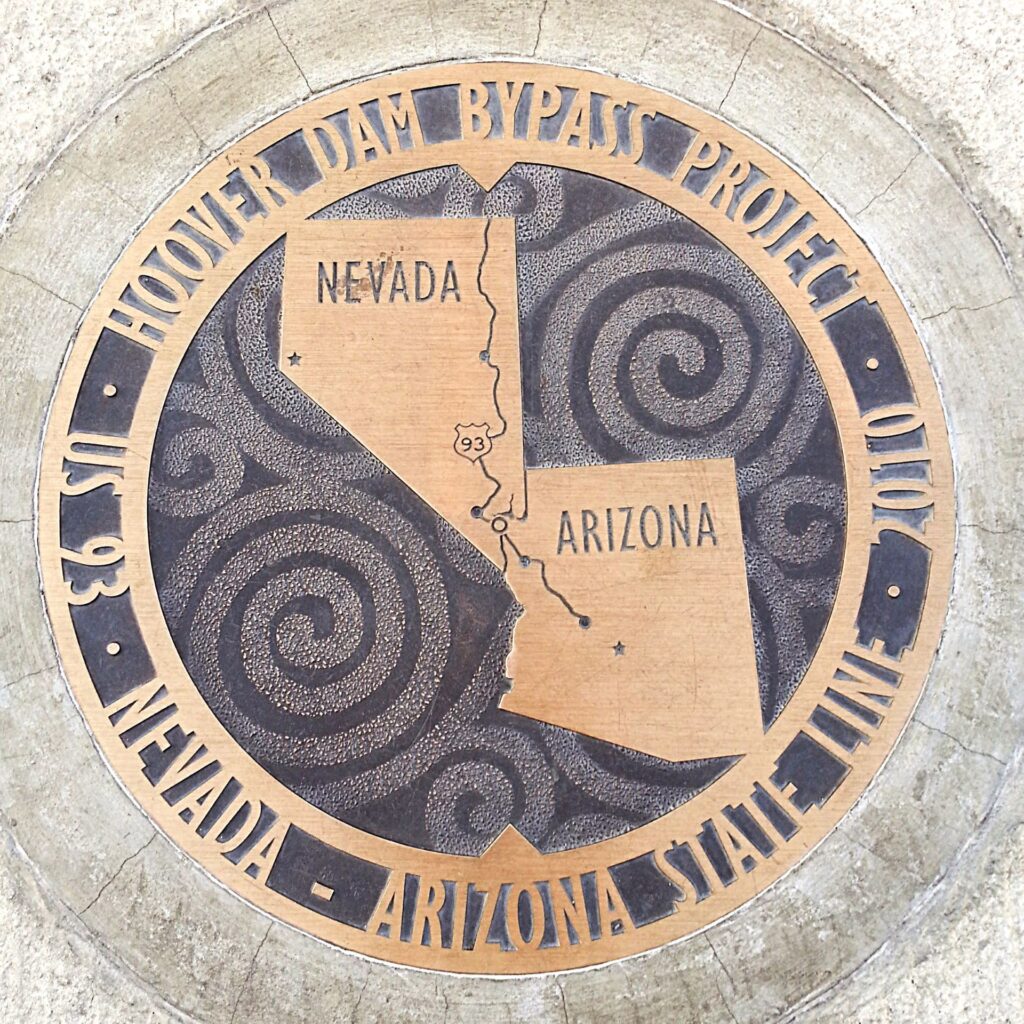
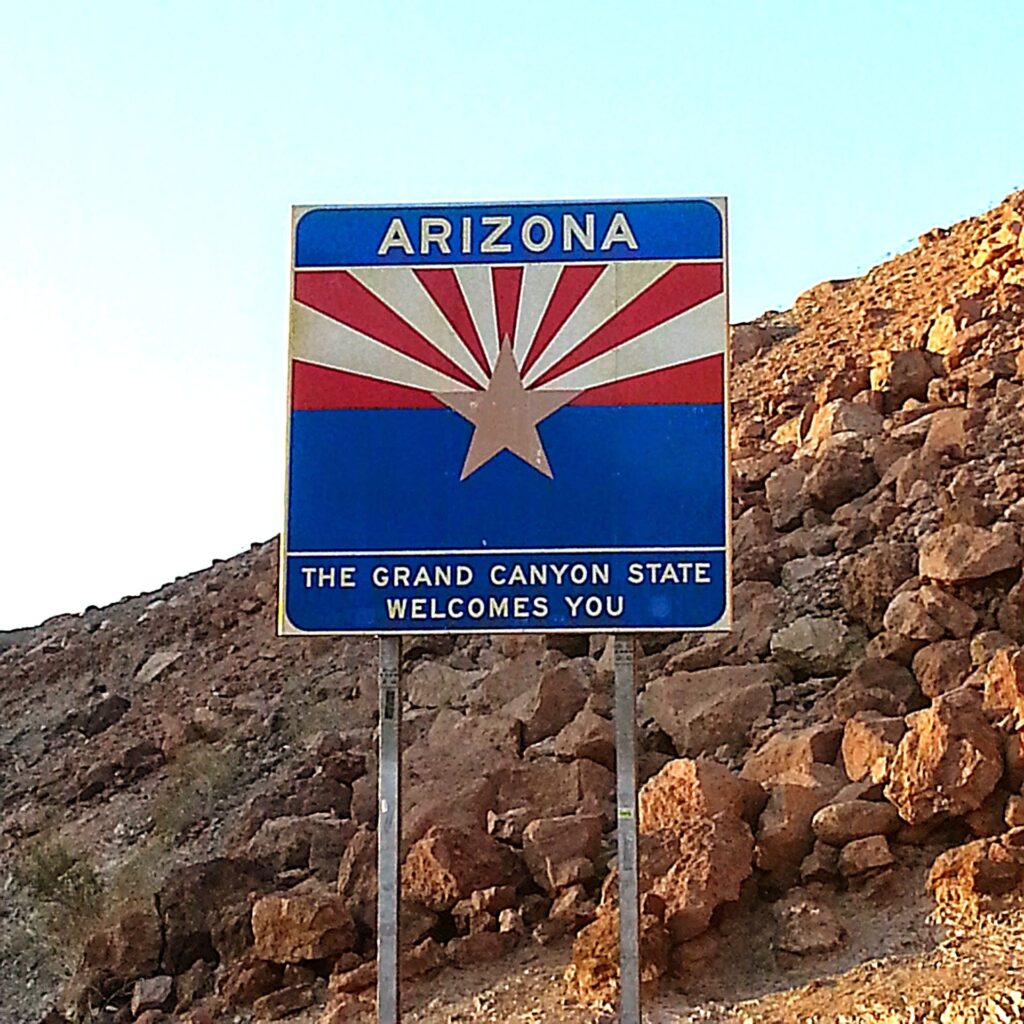
Fun fact: I like to tell people, that I walked from Nevada to Arizona (via the Memorial Bridge).
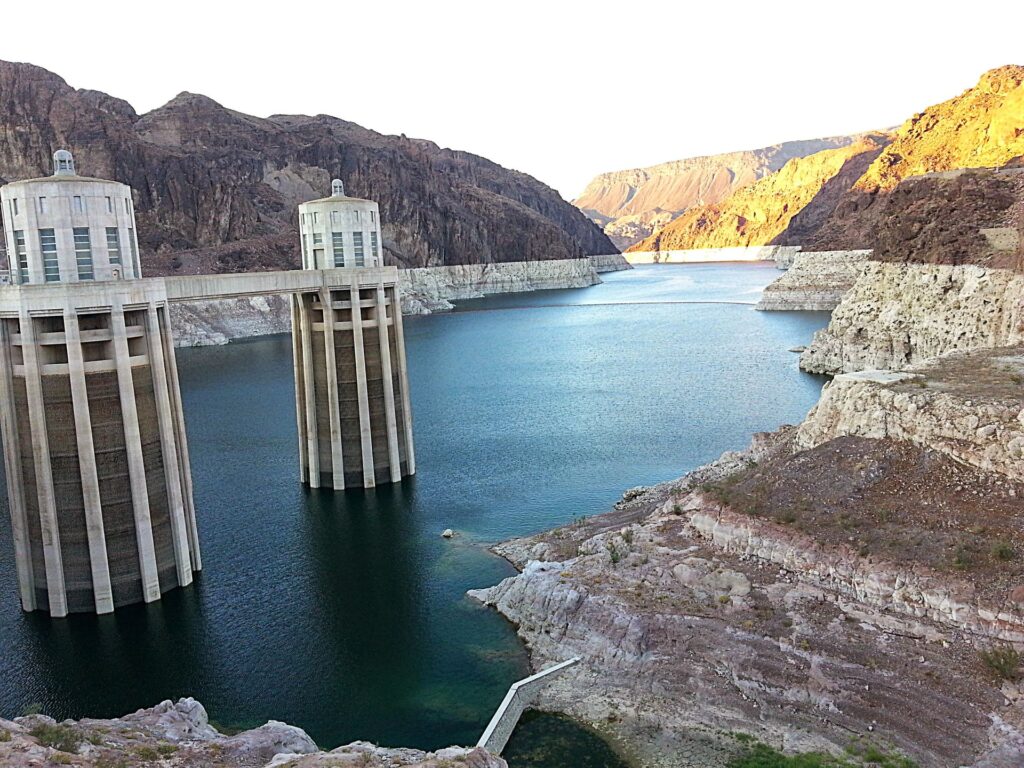
Lake Mead
Lake Mead is the vast reservoir formed by Hoover Dam and is the largest reservoir in the United States by volume. It provides water, recreation, and dramatic desert scenery, making it an essential part of the Hoover Dam landscape. This photo is from around 2013, the water levels were much higher back then.
Conclusion
The Hoover Dam stands as a testament to human ingenuity, cooperation, and environmental stewardship. As a marvel of engineering and an important power source for the region, it continues to captivate visitors with its grandeur and offer significant economic and social benefits to the states it serves. Guided tours inside the dam offer insight into its construction and operation, while the visitor center provides historical exhibits and interactive displays. Whether you’re interested in history, engineering, or just incredible views, the Hoover Dam is a must-see destination.